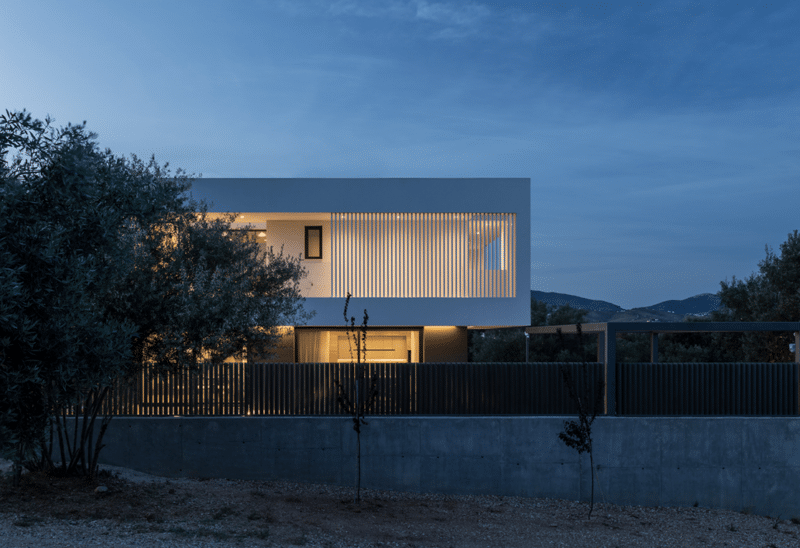
EnLIGHTening Fridays | Architectural & Theatrical Lighting
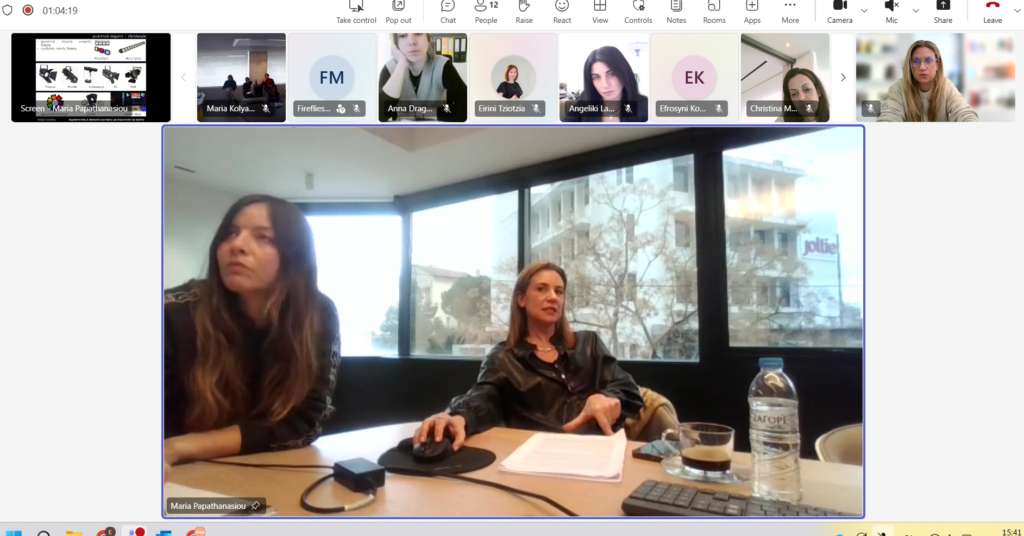
As part of the monthly EnLIGHTening Fridays series, HUB Lighting & Innovation by KAFKAS welcomed architect and lighting designer Katerina Skalkou (PhD Candidate and Founder of ALLIGHT Lighting Design Studio) for an inspiring session entitled:
“Architectural & Theatrical Lighting: Exploring the Relationship.”
Through a multidimensional presentation, we explored how two seemingly distinct disciplines — architectural lighting and theatrical lighting — intersect, influence one another, and ultimately shape the experience of space.
Light as a Shared Design Medium
While theatrical lighting is designed to direct attention and create narrative, and architectural lighting focuses on functionality, spatial perception, and everyday use, their common foundation remains the same: light as a medium for composing experiences.
The presentation highlighted how lighting can influence:
- Spatial perception and the understanding of scale
- Emotional connection to space
- The narrative of an architectural concept
- Human behaviour and user experience
From Technical Precision to Atmosphere
During the session, key architectural lighting techniques were presented, including:
- Wallwashing — enhancing surfaces through uniform illumination
- Graze Lighting — revealing materiality and texture
- Slot Lighting — integrating concealed linear light within architectural elements
- Silhouette & Mirroring Lighting — creating depth, contrast, and visual tension
Through examples from international projects and real-world applications, it became evident that light operates not merely as a tool for visibility, but as an active architectural medium.
From Richard Kelly to Contemporary Media Facades
Special reference was made to the work of Richard Kelly, whose pioneering approach defined three fundamental components of lighting composition:
- Ambient Luminescence — surrounding illumination
- Focal Glow — directed emphasis
- Play of Brilliants — the dynamic experience of sparkle and contrast
The discussion also introduced contemporary applications where theatrical principles enter architecture in increasingly dynamic ways — from media facades and video mapping to interactive building envelopes that transform architecture into a communication platform.
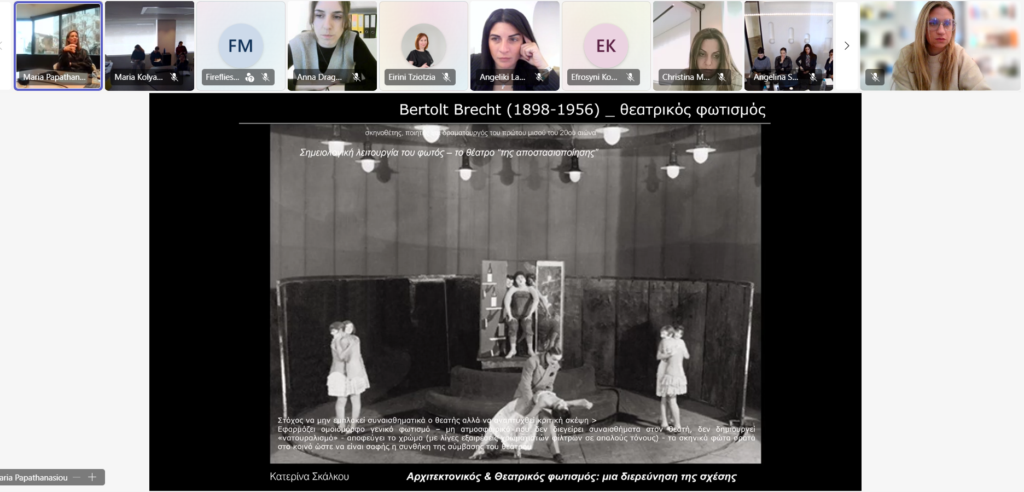
When Space Becomes a Stage
One of the key conclusions of the session was that the relationship between architectural and theatrical lighting is not oppositional, but complementary.
Theatrical lighting often becomes the catalyst for experimentation and new ideas, while architectural lighting provides the field for integration, evolution, and long-term spatial experience.
At HUB, we continue creating spaces for dialogue and knowledge exchange that explore light not simply as a technical solution, but as a medium of experience, storytelling, and architectural expression.
Stay tuned for the next enLIGHTening Fridays session.